

In recent months, Comhlámh has begun to bring our global citizenship education thinking and methodologies to new groups across Ireland. This is responding to the emerging challenges and increasingly complex and demanding realities that people working and volunteering in migration, integration and community development are responding to. Housing shortages, changing migration policies, long waiting times, limited resources and overstretched services all affect the work of those supporting migrants, refugees and communities. Alongside these pressures, the growing visibility of far right organising, increasingly hostile public discourse and the normalisation of racism are reshaping the environment in which this work takes place.
These realities do not exist outside the work; they shape the experiences of the people seeking support and they also shape the experiences of those walking alongside them.
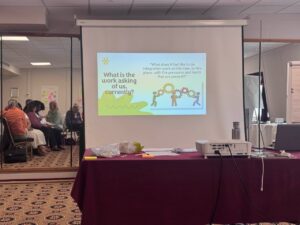
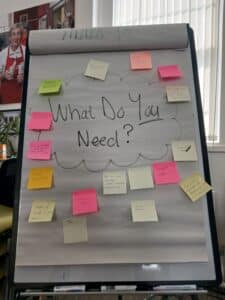
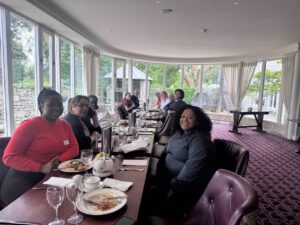
Against this backdrop, Comhlámh recently facilitated two “Holding the Work” reflective workshops. One brought together practitioners involved in community-based integration work in Roscommon. The second was delivered with the Crosscare Migrant Project. Although the participants worked and volunteered in different organisations and settings, many described remarkably similar experiences.
Participants spoke about the tension of wanting to provide meaningful support while operating within systems that are increasingly difficult to navigate. They reflected on the frustration of encountering structural and institutional barriers that limit what can be achieved, despite their commitment and expertise. The conversations also explored the emotional impact of supporting people experiencing uncertainty, exclusion and prolonged insecurity.
The workshops recognised that this impact is not experienced equally.
For Black and Brown practitioners, migrant workers and solidarity responders with lived experience of racism or displacement, professional responsibilities may overlap with personal realities. Supporting others can mean engaging daily with issues that also affect their own lives, families and communities. This additional emotional labour is often expected but rarely acknowledged.
Rather than asking people to become more resilient in the face of harmful systems, “Holding the Work” creates space to pause, reflect and connect. It encourages participants to recognise that not everything they carry belongs to them as individuals and that many of the pressures they experience are structural rather than personal. By creating space for honest conversation, the workshops support collective reflection, mutual learning and shared responsibility.
For Comhlámh, solidarity is not only expressed through international development and social justice. It is also reflected in how organisations care for those doing this work. Making opportunities for reflection, listening and collective care is one way of sustaining individuals while strengthening teams and organisations.
Reflective spaces cannot dismantle racism, resolve the housing crisis or reform migration systems. They can, however, help organisations and groups recognise when people are carrying too much, strengthen relationships between colleagues and create cultures where care, reflection and solidarity are understood as part of good practice rather than an optional extra.
As organisations continue to respond to growing complexity across the community, development and voluntary sectors, facilitated reflective practice offers one practical way to support the people carrying this work. Comhlámh welcomes opportunities to deliver “Holding the Work” workshops with organisations and volunteer-involving groups active across migration, integration, community development and related fields, creating space for practitioners to reflect, connect and sustain themselves and one another.
Contact Dervla King or Bronwyn April for more information about this workshop: [email protected] / [email protected], or if you would like more information about Comhlámh’s offerings, check out their website: https://comhlamh.org/
We are grateful to Irish Aid at the Department of Foreign Affairs and Trade for ongoing funding support. Irish Aid is “the Government’s overseas development programme which supports partners working in some of the world’s poorest countries. Irish Aid also supports global citizenship education in Ireland to encourage learning and public engagement with global issues”. We’d like to highlight that course content is created by Comhlámh and does not necessarily represent or reflect DFAT policy.
Blog Author: Bronwyn April, Education and Outreach Coordinator, Comhlámh